Solo travel in Japan is common and comfortable. Eating alone is normal, and many restaurants have counter seats or ticket machines that make a meal for one easy. If you want company on the way, you can also meet locals. Volunteer guides, guesthouses with shared spaces and a meal at a local family’s table are good places to start.
Why solo travel in Japan feels easy
Japan is often described as one of the easier countries to travel alone. Trains usually run on time, big cities have signs in English, and many people go out alone for meals, shopping or a coffee.
Japan is also generally seen as a safe place for visitors, but normal care still matters. Keep an eye on your bag in crowded trains and busy nightlife areas. Also plan your last train home, so you are not out late without a way back.
Save the main emergency numbers before you arrive: 110 for the police and 119 for an ambulance or fire. For help in English, the Japan Visitor Hotline answers calls 24 hours a day, for tourist information and for accidents or other emergencies.
Where to eat alone in Japan
Eating alone is part of everyday life in Japan, and there is even a word, ohitorisama, for people who enjoy going out on their own. These places are especially easy for one person:
- Ramen shops, where many have a ticket machine at the door: you pay at the machine, hand the ticket to the staff and sit at the counter
- Counter seats at sushi, yakitori or tempura restaurants, where you can watch the cooks at work
- Set meal shops and beef bowl chains, which serve quick, filling meals with rice, soup and a main dish
- Department store food halls and convenience stores, for a ready-made meal to eat in your room or a park
- Some grilled meat and hot pot restaurants that serve single portions at individual seats
A few places are harder for one person. Some restaurants serving hot pot or course meals may ask for at least two guests, so check before you go. When you walk in alone, say “Hitori desu” (“just one person”) and hold up one finger.
Where to stay on a solo trip to Japan
Your choice of stay shapes how social your trip feels. Each common option suits a different kind of solo trip to Japan:
- Business hotels have small, simple private rooms and are made for people traveling alone
- Capsule hotels offer a sleeping pod and shared baths, and some have floors only for women
- Hostels and guesthouses have shared lounges or kitchens, which make it easy to talk with other guests and staff
- Ryokan, traditional inns, often charge per person and include meals, so a stay for one can cost more, and some may not take single guests
If meeting people matters to you, book at least a few nights somewhere with a shared space.
Small habits for smoother solo Japan travel
When you travel alone, there is no one to remind you of the small things. These habits help you stay relaxed and reachable:
- Share your rough plan and hotel names with someone at home
- Get a data plan, such as an eSIM or pocket Wi-Fi, so maps and translation work everywhere
- Save your hotel’s address in Japanese to show a taxi driver or a station worker
- Carry some cash, because small restaurants and shops may not take cards
- Keep a power bank with you, since your phone is your map, ticket and dictionary
If you feel unsure about an area late at night, a station worker or a police box, called a koban, is a good place to ask for help.
How solo travelers can meet locals in Japan
Traveling alone can make it easier to meet people. A person on their own often seems more approachable than a group, and you can say yes when a chance comes up.
Sit at the counter
At a small counter, the cook or owner is only an arm’s length away. Asking what they recommend is an easy start, and regular customers next to you may join in.
Stay where the staff are local
Many smaller guesthouses are run by people who live in the area. They often know the neighborhood well, and some host simple evening events for guests. Ask the staff where they eat, and you may get a tip you will not find in a guidebook.
Book a volunteer guide
In many areas, local volunteers show visitors around in English and other languages. You usually pay only the guide’s travel costs, entry fees and meals if you eat together. This list of volunteer guide groups across Japan shows where they work and how to contact them. Contact a group 1 to 2 weeks ahead, because the guides are volunteers and their time is limited.
Share a meal with a local family
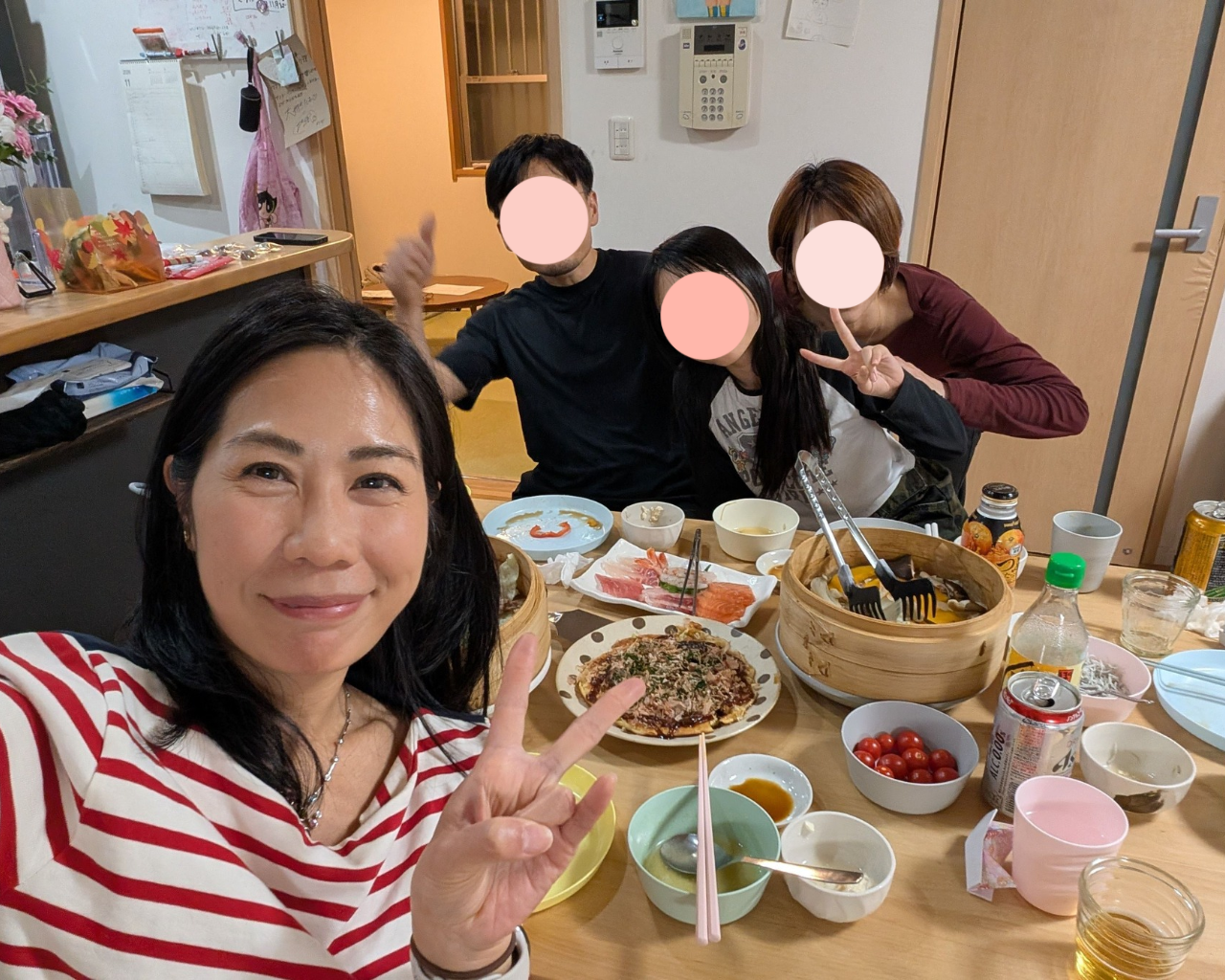
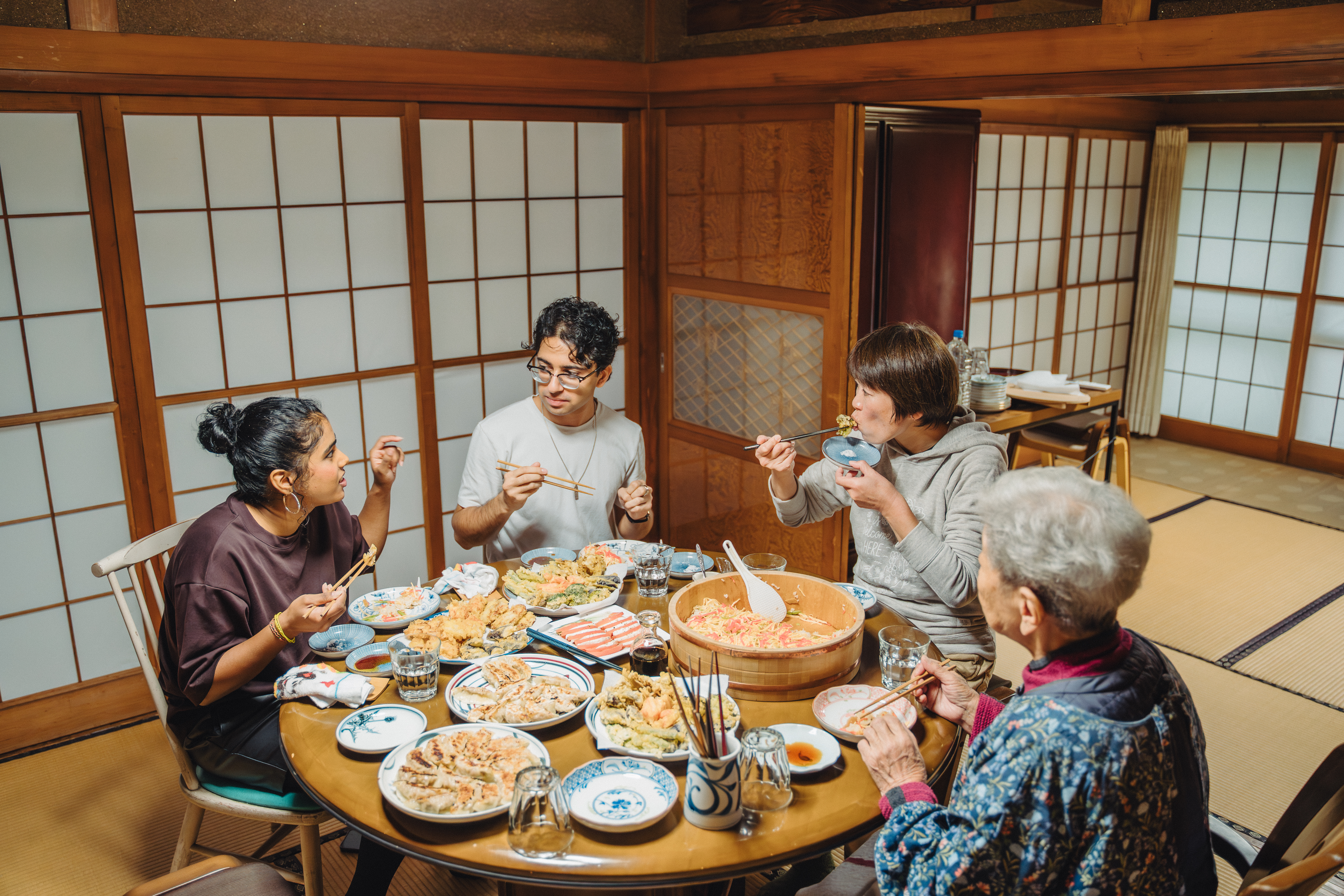
A meal at a family’s table gives you a few hours of real conversation with people who live in Japan. Through Borderless Visit, solo travelers can join a home-cooked lunch or dinner with a local host family, as the next section explains.
Sharing a meal with a family on a solo trip
Some solo travelers do not want to spend the whole trip alone and hope for a real conversation with people who live in Japan. A meal in a home gives you that time.
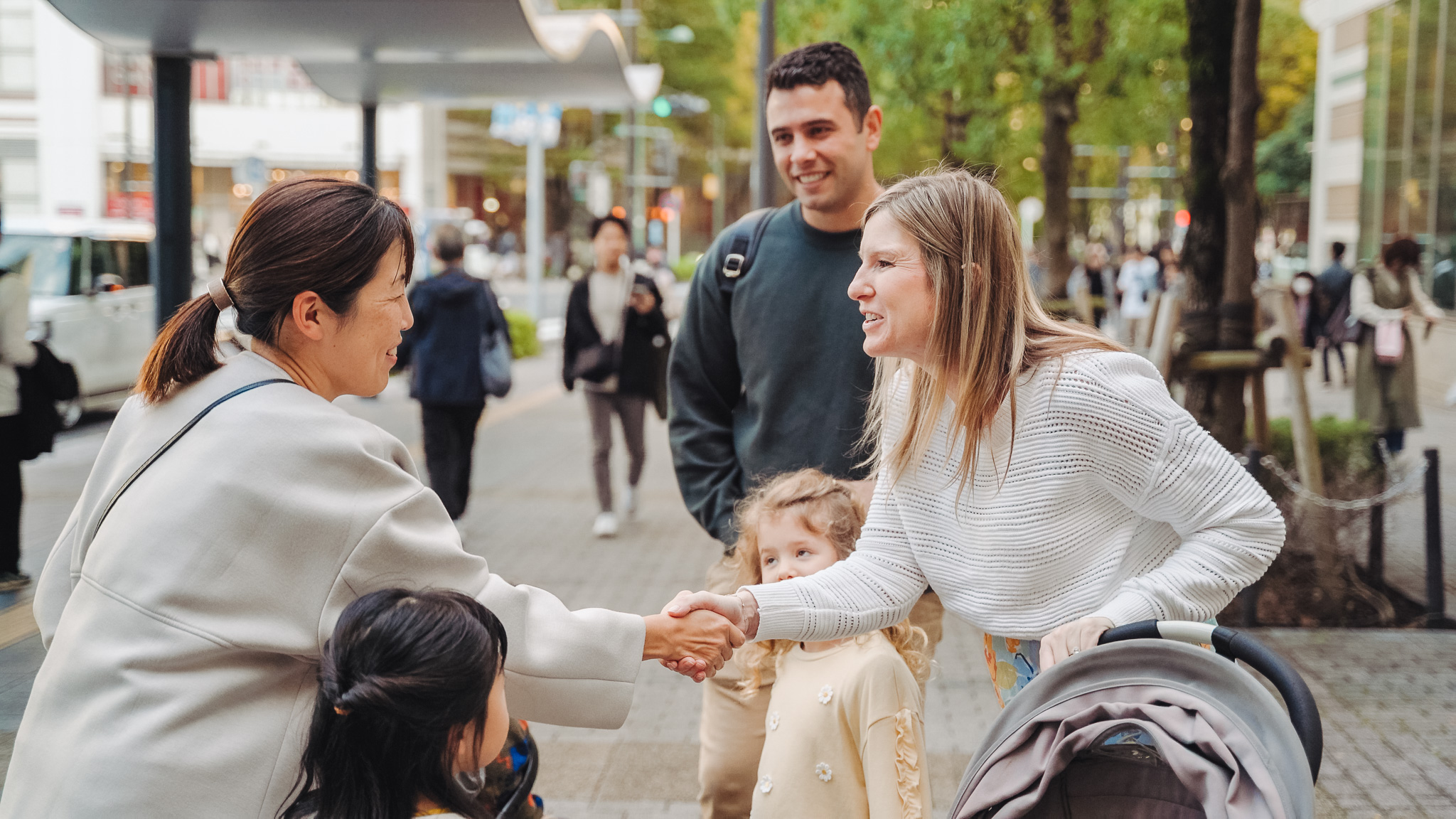
Kate, a traveler from Germany, shared her story with us. She was meeting her host for the first time, but it did not feel that way for long. They spent the first part of the day getting to know each other, sharing stories and asking questions about each other’s lives.
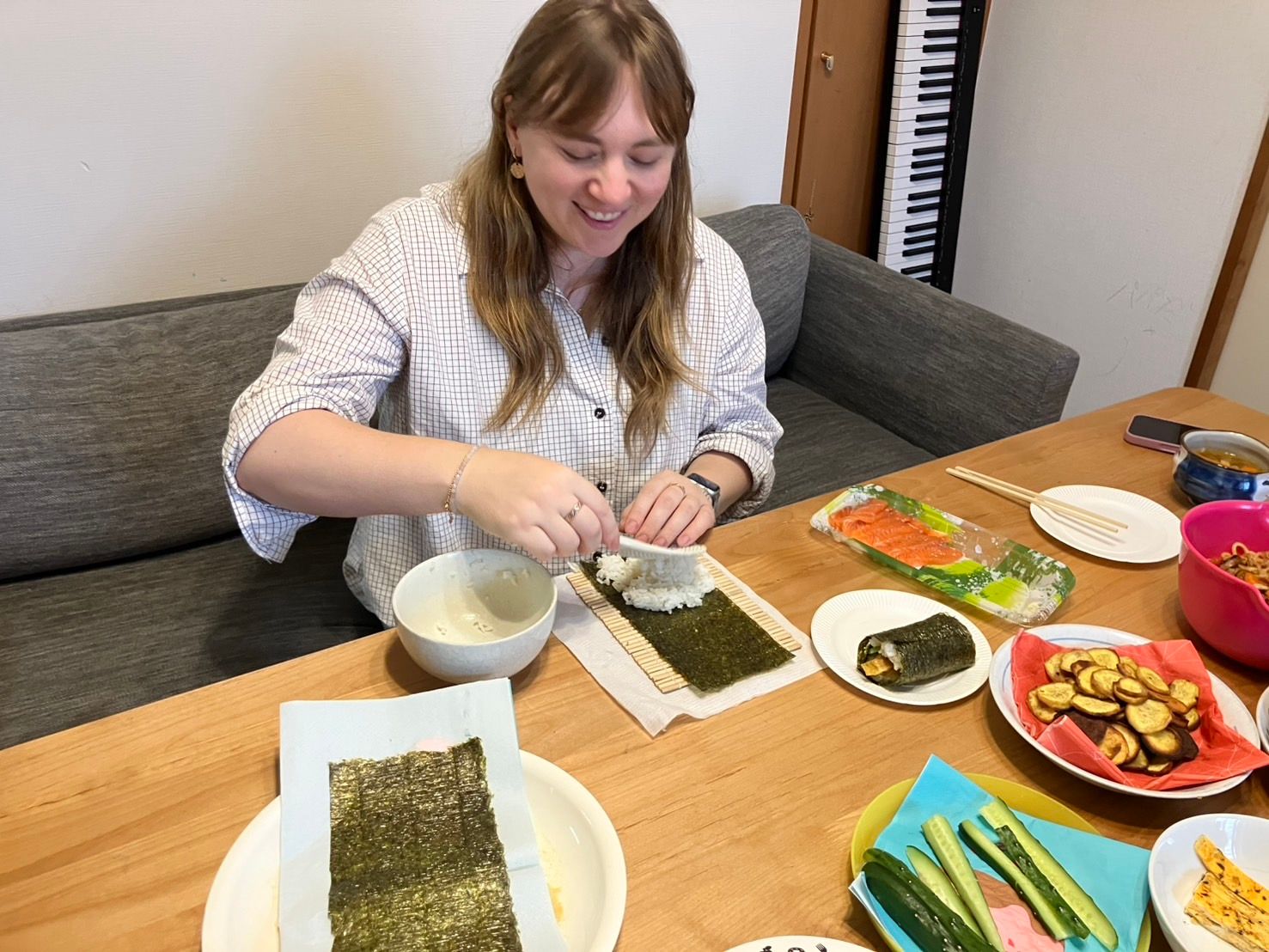
Then they made sushi rolls together, and Kate learned to roll maki herself and tried miso soup. Later, her host took her along to a Japanese class, where they played cards with children. Kate is learning Japanese, so it was the perfect level for her to practice.
She also met her host’s friend and her calm, sweet little child. By the end of the day, they had exchanged contact details.
“Even though we were meeting for the first time, it felt like we had known each other for a long time.”
Kate, from Germany
Borderless Visit (formerly Nagomi Visit) is a cultural exchange program where travelers share a home-cooked lunch or dinner with a local Japanese host family, and solo travelers are welcome. It is not a homestay, there is no overnight stay, and the meal usually takes 2 to 3 hours.
Going to a stranger’s home alone can feel like a big step. You verify your identity when you book, the Borderless Visit team reviews guest profiles, and you can message your host before you meet. The program has also been covered in the media and travel guidebooks.
Curious about what happens once you sit down? Read about what a Japanese family dinner is like.
Before your trip, pick one or two places to stay with a shared space. Then note the phrase “Hitori desu” and plan at least one meal or day with a local.