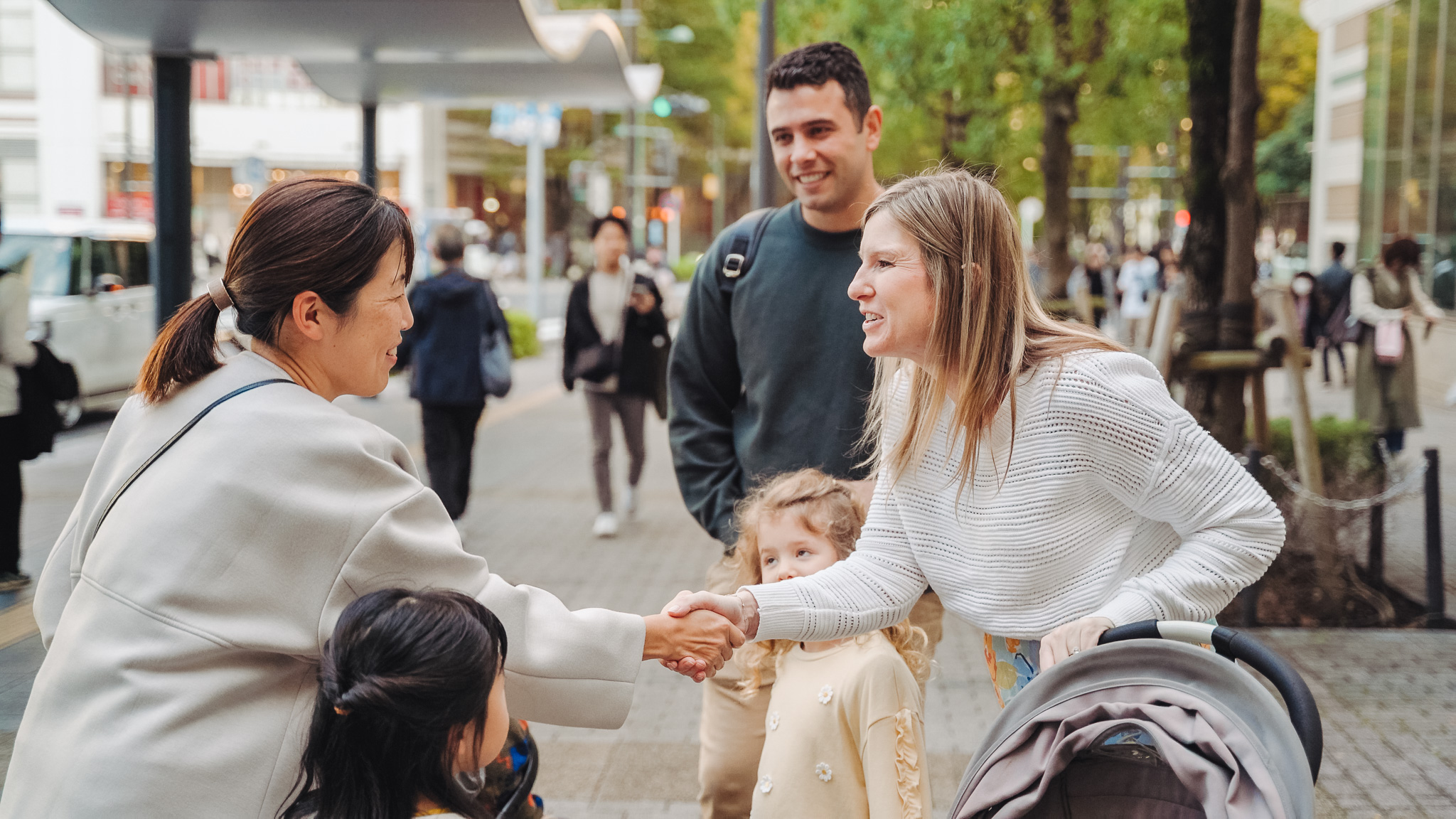
You can meet Japanese locals without speaking Japanese. A translation app, a few polite Japanese words, simple English and gestures are usually enough for short, friendly talks. Expect slow conversations and some pauses, because English levels in Japan vary widely and many people feel shy about speaking it.
What to expect when you meet Japanese locals without Japanese
Most of your talks will be short and simple, and that is normal. Many people in Japan study English at school, but they get few chances to use it, so speaking can feel hard even when they understand you.
Reading is often easier than listening. If a spoken question does not work, try showing the same question in writing. This one small change solves many problems.
How to use a translation app in a real conversation
A translation app is the most useful tool you can bring, as long as you use it in short steps. These habits help:
- Download the Japanese language pack before your trip, so the app works without a signal.
- Use camera translation for menus, signs and food labels.
- Type or say one short sentence at a time, without slang or jokes.
- Turn your screen toward the person so they can read the Japanese, then hand over the phone or let them speak into it.
- If the answer looks strange, ask again with a simpler sentence.
Start with a word or a smile before you raise your phone. Saying “sumimasen” (excuse me) first, then showing the screen, feels more polite than pushing a phone toward someone. Many people will happily take out their own phone and reply the same way.
A few Japanese phrases worth learning
You do not need many words. These seven cover most short moments, and people usually notice the effort.
| Japanese phrase | Meaning and when to use it |
|---|---|
| Konnichiwa | Hello, during the day |
| Arigatou gozaimasu | Thank you, in a polite form that works almost anywhere |
| Sumimasen | Excuse me, or sorry, for example to get attention |
| Eigo wa daijoubu desu ka? | Is English OK? Ask this before you switch to English |
| Wakarimasen | I don’t understand |
| Yukkuri onegaishimasu | Slowly, please |
| Oishii | Delicious, a good word for any meal |
If you want more, this list of basic Japanese words and greetings includes sounds and examples. Practice saying “arigatou gozaimasu” out loud a few times, because you will use it every day.
Simple English and gestures that help
Simple English helps the most when you slow down and make it easy to follow. A few small changes make a big difference:
- Speak a little more slowly, not more loudly.
- Use short, common words, such as “Is this spicy?” instead of a long question.
- Point to what you mean, such as a dish, a place on a map or a photo on your phone.
- Show numbers with your fingers or on the phone calculator.
- Keep a pen and paper or a notes app ready for words and times.
It also helps to know a few gestures you may see. Crossing the arms or two fingers in an X usually means “no” or “not allowed”. A hand waved in front of the face often means “no” or “not me”, and people may point to their own nose to mean “me”.
How people may react when you don’t speak Japanese
Reactions vary from person to person, and most of them are kind. Someone may apologize for their English, answer with one or two words, write the answer down, or call over a coworker who speaks more English. Others will keep talking in Japanese and use their hands, and you will still understand more than you expect.
A quiet reply is often shyness, not a lack of interest. Some people understand more English than they feel ready to speak, and they may answer with a smile or a nod instead. Smile back, keep your questions simple, and give people time to answer.
When you do not need to talk
Not every moment with local people needs words. Doing something together, such as eating, cooking, walking through a neighborhood shopping street or watching a festival, gives you a shared focus. Pauses are common in Japanese conversations, and a quiet moment is not usually seen as awkward.
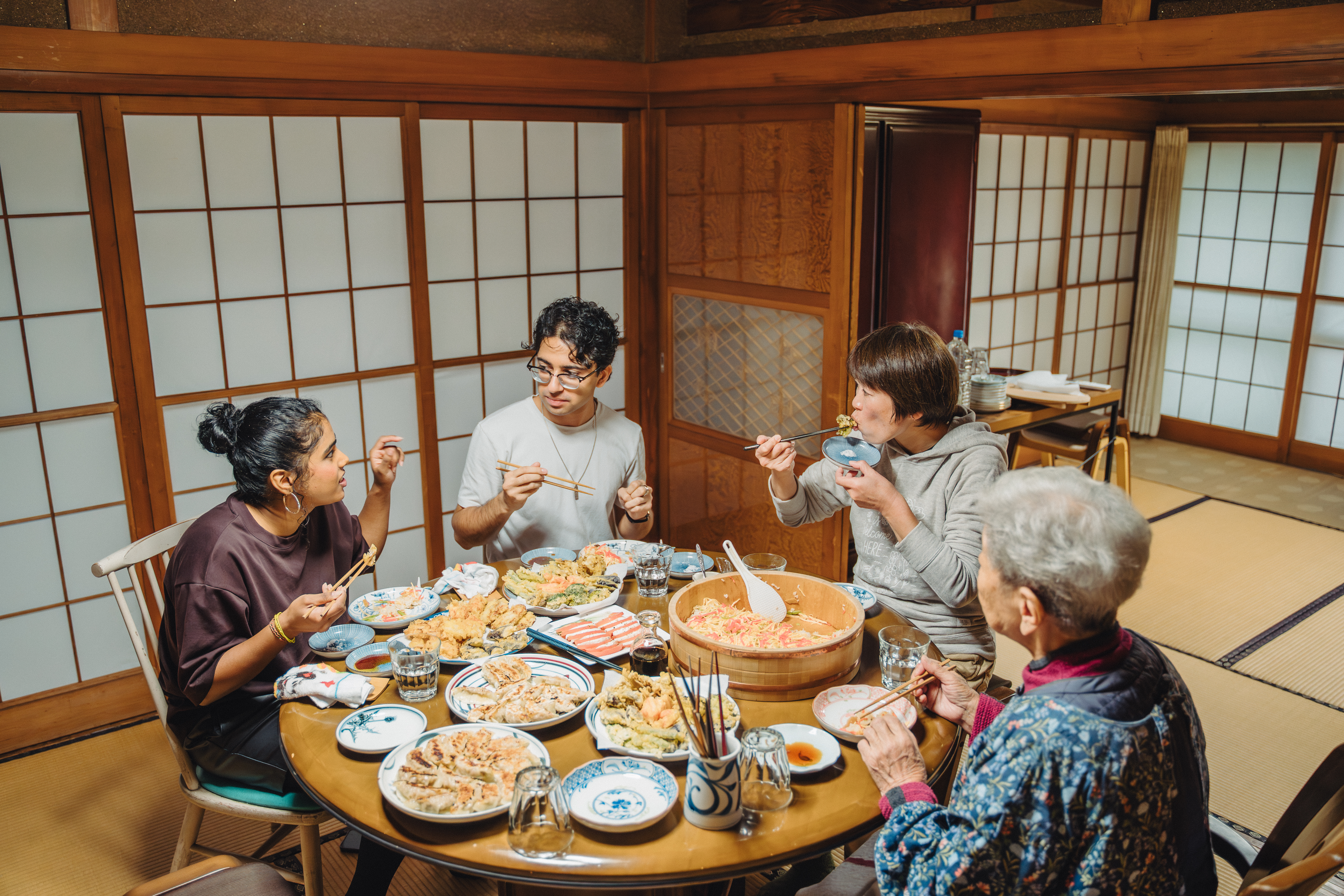
At a meal, food often does the talking. You can point to a dish and say “oishii”, offer to help clear the table, or show a few photos of your home and family on your phone. A photo of your hometown can start a longer talk than any phrase.
Sharing a meal with a family when you speak little Japanese
A meal at a family’s table gives you time, so slow talk and pauses feel natural. To see what usually happens at the table, read about what a meal in a Japanese home is like.
Borderless Visit (formerly Nagomi Visit) is a volunteer-based program where travelers share a home-cooked meal with a local Japanese host family. You send a request, hosts who are available and interested send offers, and you pick the host who suits you.
All host families are ready to welcome guests in English, but their levels vary. Often one family member leads the talk, while others join with smiles, gestures and simple words. Some hosts also speak French, German, Spanish or other languages, which you can check on their profile. You can message your host before the meal, and in one case those messages switched between three languages.
Before your trip, download a translation app with the Japanese language pack and practice the seven phrases above. On the day, keep your sentences short and leave room for pauses.