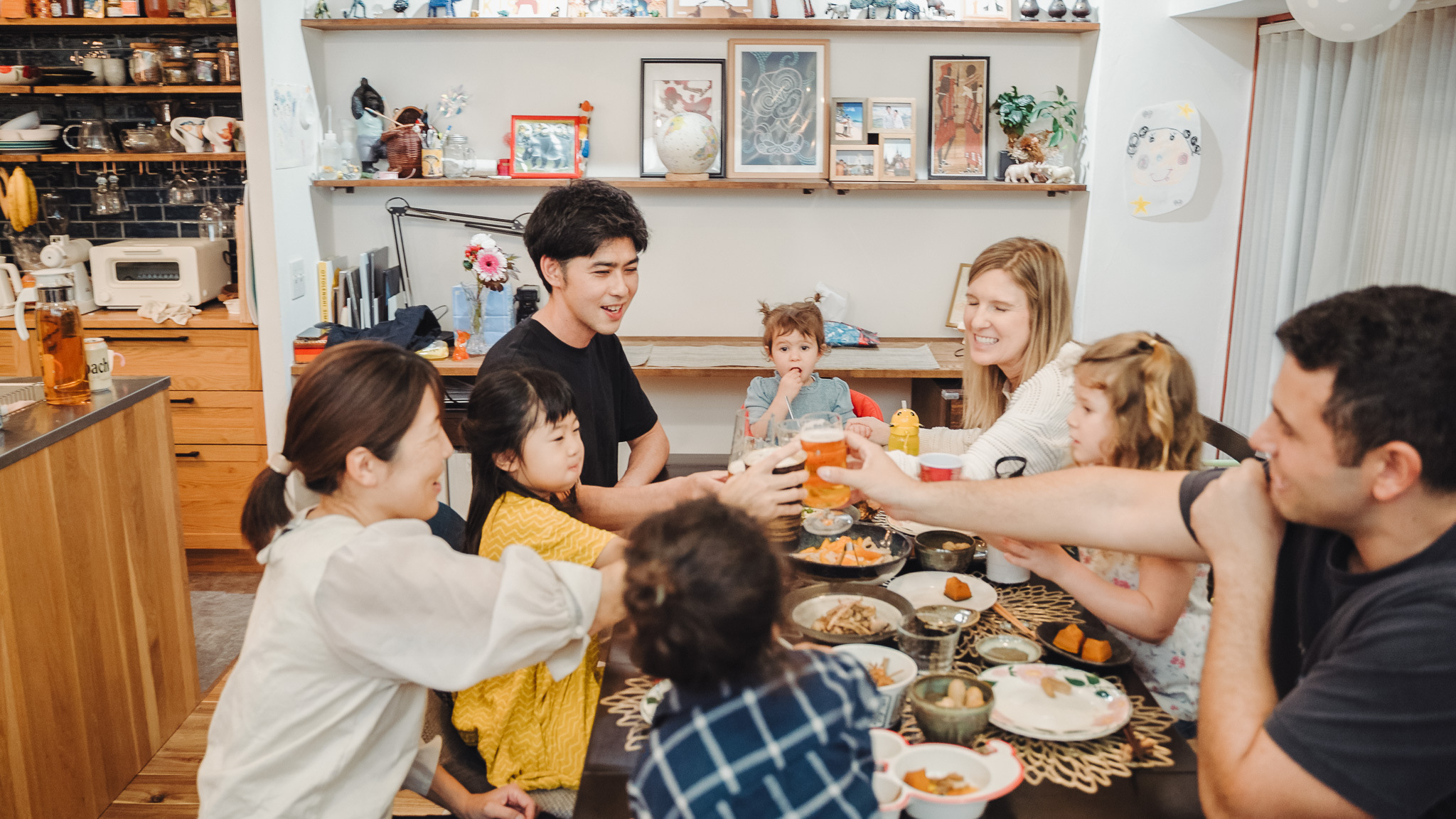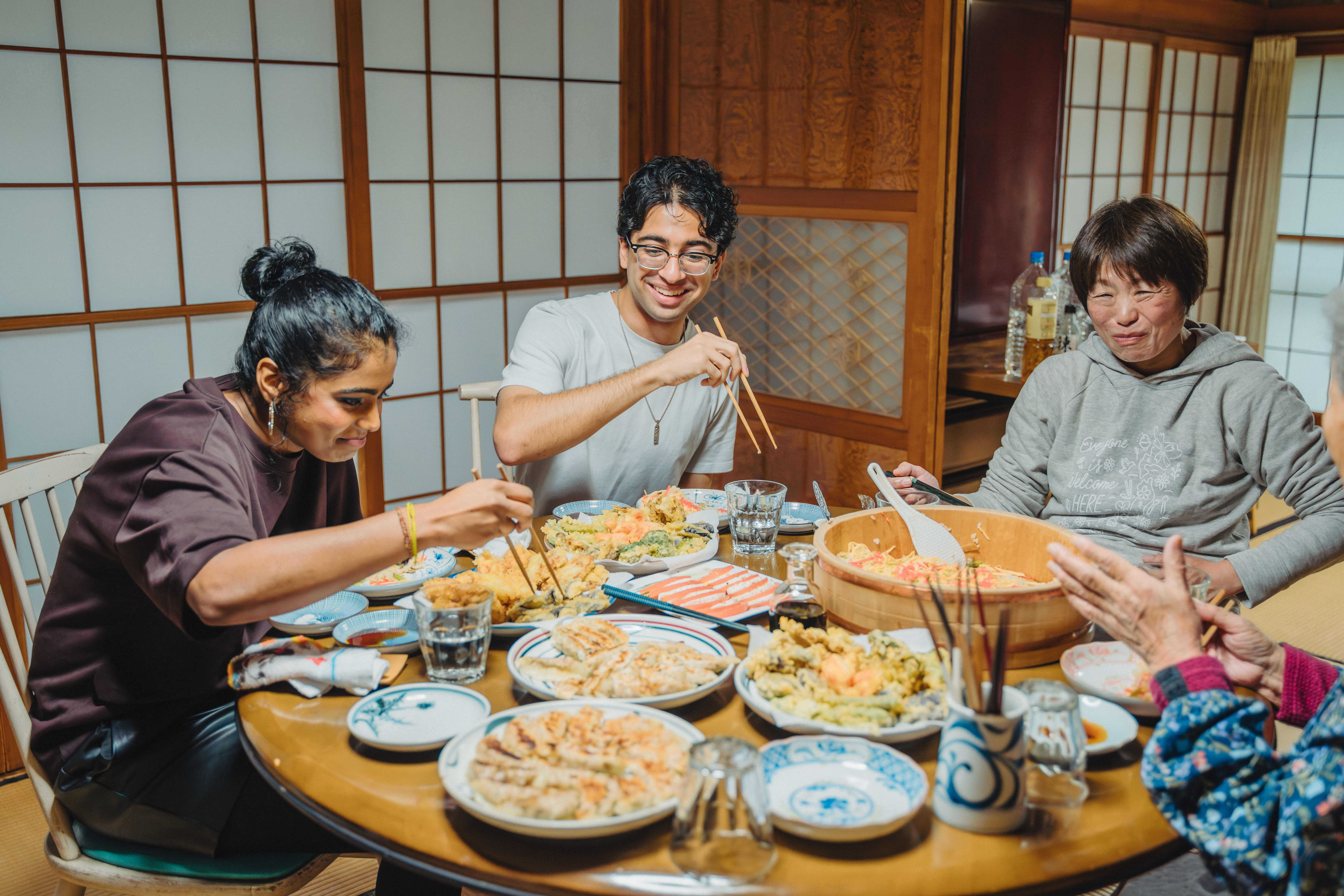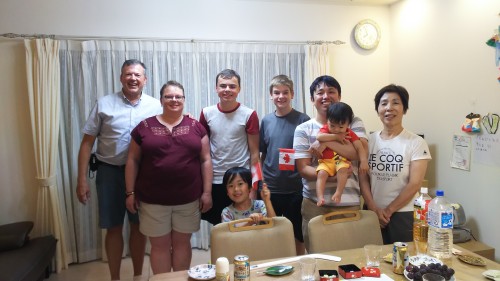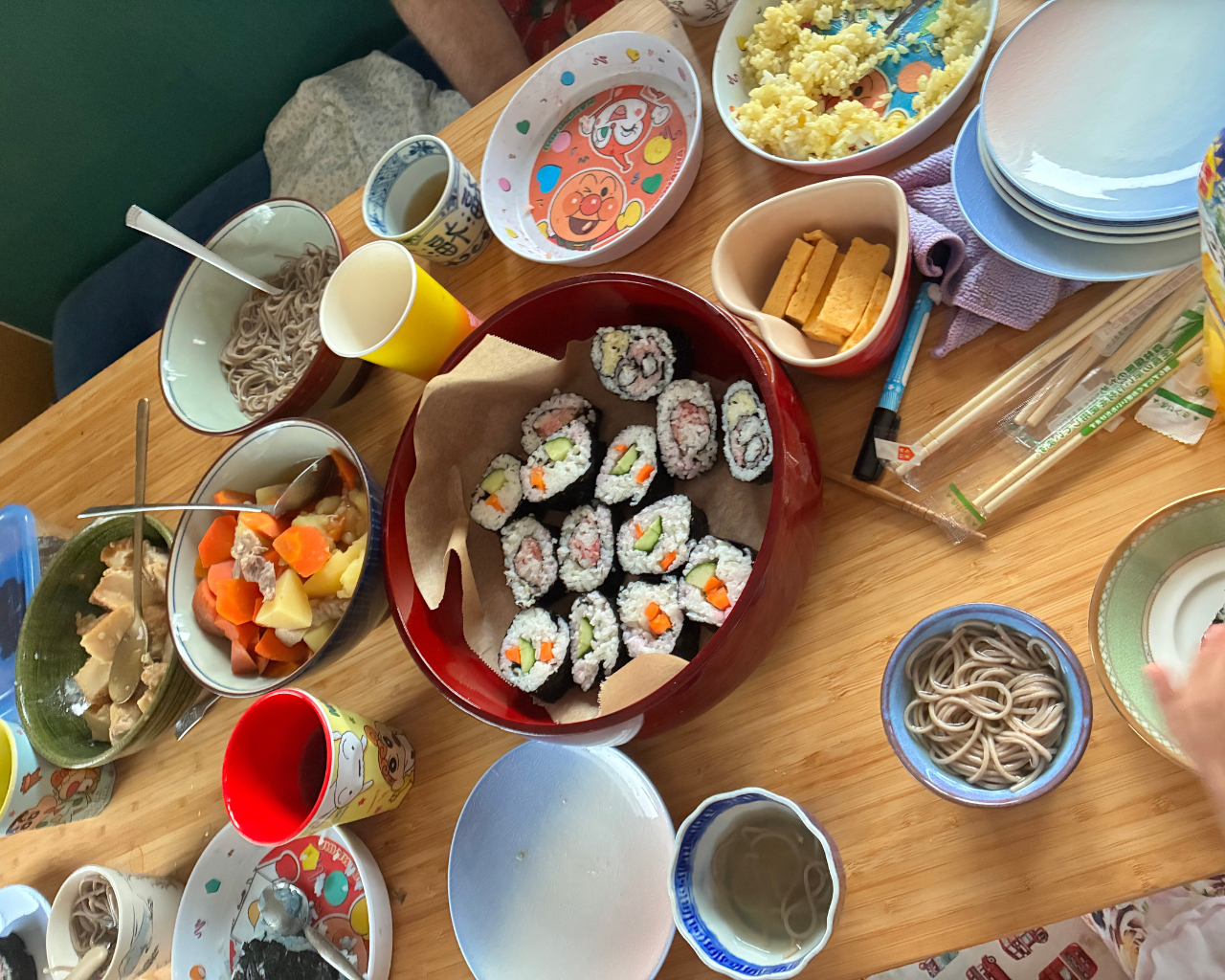
A Japanese family dinner is usually a relaxed, home-cooked meal eaten at the family’s own table. You leave your shoes at the entrance, share simple dishes such as rice, soup and a few sides, and talk about food, family and travel. As a guest, expect the meal to last a few hours.
Despite the name, the meal can just as well be lunch. Customs also differ by family, region and generation, so use what follows as a guide to what often happens.
What a Japanese family dinner is usually like
There is no menu and no set program. The family cooks food they like to eat, serves it at the table they use every day, and the meal moves at the pace of the conversation.
Who sits at the table depends on the home. You may eat with a couple, with parents and their children, or with one person who lives alone. Sitting at a family’s table is a simple way to see the everyday life that travelers often have in mind when they talk about a real Japanese experience.
A meal like this can be lunch or an evening meal, and the shape is much the same. The main difference is how it fits into the rest of your day, which matters when you plan your travel around it.
Arriving at a Japanese home: shoes, slippers and greetings
The first few minutes follow a pattern that many Japanese homes share. Knowing it in advance makes the start feel much less awkward.
Often the host meets you nearby first. At one lunch, the host met two guests at the train station and walked with them past local temples to her home, where the food was already set out on the table.
This is what usually happens when you arrive:
- Your host opens the door, and you say hello and thank them for having you.
- You step into the genkan, the small entrance area just inside the door, and take off your shoes there.
- You step up into the house in socks, or in slippers if your host offers them.
- If you brought a small gift, you give it to your host near the start.
Place your shoes neatly side by side, with the toes pointing toward the door if there is space. Wear clean socks without holes, because your host will see them. This guide to the genkan and taking off shoes explains each step in more detail.
Slippers are for wooden or carpeted floors. If a room has tatami, the woven straw mats used in traditional rooms, take the slippers off before you step onto it.
What food to expect at a home meal in Japan
Home cooking in Japan is usually simpler than what you see in restaurants. A typical meal has rice, a soup such as miso soup, and a few side dishes with vegetables, fish or meat.
Each person often has their own bowl of rice and soup, while larger dishes go in the middle of the table for everyone to share. Your host may show you how to take food from the shared plates.
Many families also cook dishes that came from abroad and became everyday food in Japan, such as curry rice or gyoza, which are pan-fried dumplings. What you eat depends on the family, the season and the region.
Sometimes the cooking becomes part of the visit. At one evening meal in Nagano, the family and their children taught the guests how to make okonomiyaki, a savory pancake made with cabbage and other fillings. The guests said they felt at home from the moment they arrived.
If there is something you cannot eat, tell your host before the day and be specific. Say which foods you avoid and whether small amounts in sauces matter. Japanese soup stock is often made from fish, so mention it if that is a problem for you.
At the table: a few customs worth knowing
You do not need to learn every rule of Japanese table manners for a meal at home. A few habits cover most of it, and hosts usually understand that visitors make small mistakes.
These are the customs you are most likely to notice:
- Before eating, people often say “itadakimasu”, a short phrase of thanks for the meal.
- After eating, “gochisosama deshita” thanks the people who cooked.
- Many people wait until everyone has food in front of them before they start.
- Shared plates sometimes come with serving chopsticks. Use them to take food, then eat with your own pair.
When you are not sure what to do, watch your host and follow them. For more everyday customs, this guide to Japanese manners from the national tourism organization is a good place to start.
What you talk about over a meal with a Japanese family
Conversation often begins with the food. Asking about a dish is one of the easiest ways to start talking. You can ask what it is, how it is made, or whether it comes from the area.
From there, the talk usually moves to everyday topics: your home country, your trip so far, school or work, and life in the family’s neighborhood. Pictures of your town or your favorite food can help when you cannot find the words.
Shared life stages make it easy to keep talking. At one lunch, a guest and her host, both mothers, compared how they were raising their children and talked about travel and work. The host was just as curious about her guests as they were about her.
English levels vary between homes and even within one family. In many families, one person speaks more English than the others and helps the talk along. Pauses are common, and a quiet moment usually does not mean anything is wrong.
Learning a few basic Japanese words before the meal also helps, even if you only use them to say thank you. For more ideas on talking with people during your trip, see these ways to meet locals in Japan.
How long a meal in a Japanese home lasts
How much time to plan for
When you are a guest, a meal in a Japanese home can easily take a few hours, or longer when the talk goes well. If you eat dinner with a Japanese family, keep the rest of the evening open, and after lunch, do the same with the afternoon. Leave some time with nothing planned after the meal, so you do not have to watch the clock at the table.
When I joined a host family for lunch as a guest, we cooked, ate and talked from late morning until after four in the afternoon. That was longer than usual, and you should not expect the same, but it shows how easily time can stretch at a family table. Read the full story.
How to end the meal and say goodbye
There is often no fixed end time. Near the end, there may be tea or something sweet, and the talk slows down. That is a natural moment to say it is time for you to go.
Say gochisosama deshita if you have not yet, and thank the family for their time. Put your shoes back on in the genkan, and send a short thank-you message the next day if you can.
Common mistakes at a first meal in a Japanese home
Most mistakes at a family table are small and easy to avoid:
- Arriving much earlier than the agreed time, while your host may still be cooking. Aim to be on time.
- Wearing slippers onto tatami, or walking back into the living room in the toilet slippers. Many homes keep a separate pair just for the toilet.
- Taking photos of the family or the inside of their home without asking first.
- Staying quiet because you are afraid of doing something wrong. Asking “Is this OK?” is always fine.
Sharing a meal with a host family through Borderless Visit
If you do not know a family in Japan, a hosted program is one way to share a meal like this. Borderless Visit (formerly Nagomi Visit) is a cultural exchange program that connects travelers with local Japanese host families for a home-cooked lunch or evening meal at the host’s home.
You send a request, hosts who are available and interested send offers, and you choose one. Meeting a family you do not know is easier after some contact, so you can message your host before the day, and you verify your identity when you book.
Hosts live within 1 hour by public transport of the station you choose, and you meet at a local station and walk to the home together. Plan for about half a day, including travel. Hosts cook everyday home food, and many like to cook together with guests who ask. Read more about meals with a local host family.
Before your first meal in a Japanese home, check three things: clean socks, a clear note on what you cannot eat, and a gap in your plans after the meal. Everything else you can learn at the table by watching your host.