
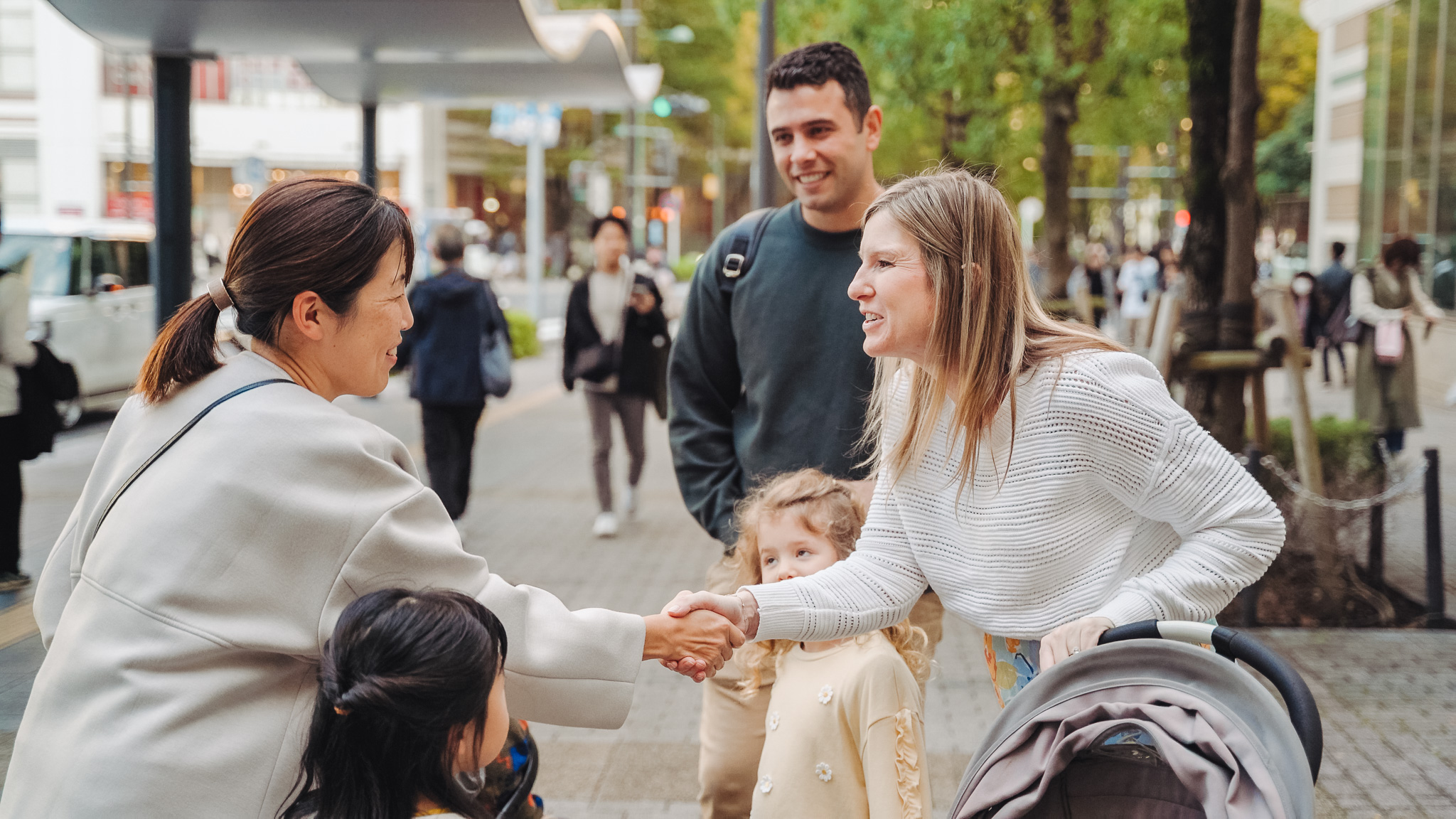
The most practical ways to meet locals in Japan are to start short conversations in everyday places, join a language exchange or a local event, and share a meal with a Japanese family. Settings with a shared activity often make conversation easier than trying to talk with strangers on the street.
Ways to meet locals in Japan: a quick comparison
Each way gives you a different kind of contact. Some need no planning at all, and others are best arranged a few weeks ahead. The table shows what each one is like and what to keep in mind.
| Way to meet locals | What it is like | Keep in mind |
|---|---|---|
| Everyday places | Short, unplanned talks with shop staff, restaurant owners or people nearby | Talks are often brief, and people may be busy or shy about their English |
| Language exchange events | Planned meetups where people practice each other’s languages, mostly in larger cities | Events change often, and many people come to practice English, so check recent details first |
| Local events | Neighborhood events where visitors join the crowd | You see many people but may talk with only a few, and dates depend on the season |
| Meal with a host family (Borderless Visit) | A seated meal at a family’s table, with time to talk | Needs a request at least 72 hours in advance, and has a fixed fee |
If you only have a few days, everyday places and one planned event are the easiest to fit in. A home meal takes more planning, but it gives you the most time to talk with one family.
How to start a conversation in everyday places
Short talks happen most often in places people use every day, such as small shops, local restaurants and quiet neighborhood streets. For ideas on where to go, see this guide to finding a real Japanese experience. Once you are there, the hard part is usually the first sentence.
What to ask
The easiest opening is a question about something you can both see. It is simple to answer, and it does not feel personal. These questions often work well:
- “What do you recommend?” in a small shop or restaurant
- “Is this a local dish?” when you see food you do not know
- “How do you eat this?” when your order arrives and you are not sure
- “Is there a good place to eat near here?” while you are out walking
How to tell if someone has time
Some people will answer politely even when they are busy, so it helps to read the situation. If there is a line, or the person keeps working while they reply, ask one question and say thank you.
A quiet time of day works better, and counter seats in small restaurants often lead to a chat with the owner or the person next to you. If someone asks you a question back, it is a good sign they are happy to keep talking.
Keep it short and polite
A short, friendly exchange is a good result in itself. Say thank you, and in a shop, buying something small is a natural way to end the talk. Some people feel shy about their English and may answer with a smile, a nod or a few words. This is common, and it does not mean they are unfriendly.
Language exchanges and local events
Planned events give everyone a reason to be there and a reason to talk. That takes away much of the pressure of starting a conversation with a stranger.
At a language exchange, people meet to practice each other’s languages, often in a cafe or a community space. Many are held in larger cities, and some ask you to sign up online first. Search for “language exchange” with the name of the city you are visiting, and check that the event is still running.
Community events are another option. If one of the festivals held in towns across Japan falls on your travel dates, you can join as part of the crowd. You may not have long talks, but you share the same day with the people who live there.
How to meet local people in Japan with fewer awkward moments
Most awkward moments come from small differences in manners. A short read on basic Japanese etiquette before your trip can help you feel more relaxed when you talk with people.
Fluent Japanese is not needed to start. A greeting, a thank you and a translation app on your phone are often enough for a short talk.
A few habits can make meeting people harder:
- Asking personal questions too early, such as age, job or income. Talk about food, the place or your trip first.
- Speaking loudly on trains or in small shops, where people usually keep their voices low.
- Taking photos of people before you ask them.
- Spending all your time in the busiest tourist areas, where most locals you meet are at work.
- Expecting a close friendship after one conversation.
Sharing a meal in a local home
Short talks are easy to find on a trip, but long conversations are harder. A meal at someone’s home gives you time. You share the table for the whole meal, and the talk can move from the food to work, school and daily life.
Some travelers say they were not looking for a special activity, just time with ordinary people at a table. At one family lunch in Kumamoto, a child who was learning English chatted with the guests all afternoon.
Borderless Visit (formerly Nagomi Visit) is a volunteer-based program where travelers share a home-cooked meal with a local Japanese host family. You send a request, hosts who are available and interested send offers, and you choose the one that suits you.
Going to a stranger’s home can feel like a big step, so the first contact happens through messages, not at the door. After you choose a host, you can message them about food, plans and any questions you have. You verify your identity when you book, and the Borderless Visit team reviews guest profiles.
Pick one or two ways that fit your trip. Short talks need no booking, while events and home meals work best when you check dates early, ideally once your cities and travel dates are set.

