🎉 Nagomi Visit has a new name: Borderless Visit. Our mission remains the same, connecting people through home-cooked meals and genuine encounters. Learn more

Blog

Miso soup beyond tofu

2012-02-15

Miso soup beyond tofu

Yesterday I went to a friends house and was surprised that she served miso soup with fresh ginger. Being a fan of all things ginger, I searched around on the internet both in Japanese and English for similar recipes. Although it wasn’t one of the most popular ingredients when it comes to miso soup, there seemed to be quite a few fans out there that liked it most during the wintertime to warm up. Seemed like a logical combination but I guess it just never crossed my mind to try it out.

It’s little discoveries like these that make miso soup exciting. A soup that seems so simple and straight forward has so much potential.

Miso soup is a staple menu in Japanese restaurant’s worldwide but I always feel that there is something lacking in them. Yes there are restaurants that get it right of course, but often times it just tastes like hot water with just miso and no depth. But I think what makes them less exciting is that there is not much variety when it comes to the actual ingredients inside the miso soup. It’s always tiny pieces of tofu, wakame seaweed, and maybe some green onions.

But don’t get me wrong, having tofu and wakame is not the problem. It’s the most basic yet most popular ingredient for miso soup. It’s just that even if you are just making this basic miso soup, I feel like not many people realize there is still a lot of room for creativity. You can just start from using different types of tofu. Of course you can choose between the basic hard or soft tofu but different brands have different flavors, especially fresh tofu, so it’s best to try all of them out. You can also cut the tofu into small pieces or large depending on what you put in with the tofu. There is also of course the option of using different dashi soup stock.

I suppose its best to make your own dashi from scratch but for everyday miso soup I use an ago flying fish dashi packet that looks like a tea bag because I personally like the more nuanced flavors that come from this dashi than when I use the popular Ajinomoto Hondashi. But that doesn’t mean you can’t make a pretty good miso soup with Hondashi so I don’t want people to knock it since it is the most accessible instant dashi out there. I think the key is to make sure that the flavors from your ingredients become part of the broth, adding more depth. That’s where the ingredients play a big role in making the flavor in your miso soup unique.

Besides tofu, I like potatoes in my miso soup with wakame but my husband is more of a daikon radish or taro fan which makes the soup base sweeter. Onions and cabbage are also options that make the soup base sweeter. An alternative to normal tofu would be fried tofu which is less oily than it sounds so it is one of my favorites. There are also all sorts of mushrooms in Japan so whichever one is the cheapest on that day usually ends up in our miso soups.

The tonjiru pork base miso soup that is part of the Nagomi Kitchen Japanese basic cooking class menu, although the dish has it’s own name, it really is a variation of miso soup. Since tonjiru has a lot of ingredients in it, we’re hoping it will help people to taste how all these ingredients blend with the miso, to get a sense of the potential miso soup has beyond your normal tofu, wakame, and green onion combination.

Even after you’ve done making the miso soup, there is also the option of putting a dash of shichimi chilli pepper just before you eat if you’re a fan of spice like me. So as you can tell, the combinations are endless so next time you are craving some miso soup, try these options out to break away from your normal miso soup cycle. Or if you are planning on joining us at Nagomi Kitchen, feel free to ask us questions because that's what we're here for!

How to make carrot flower

2012-01-16

This is the simmered vegetables which called as Nimono(煮物)in Japanese.

How to make carrot flower

Simmer carrot, lotus root, “Konnyaku” and any other vegetables with soy sauce, mirin and Sake. Sometimes we add the chicken in it as well. The taste of these kind of Nimono depends on each home.

Do you want to try making this carrot flower? Check the video below you can find how to make it. (Though it's in Japanese, but you can understand by just watch it.)

Make Home-made Takoyaki at your Nagomi Visit

2012-01-09

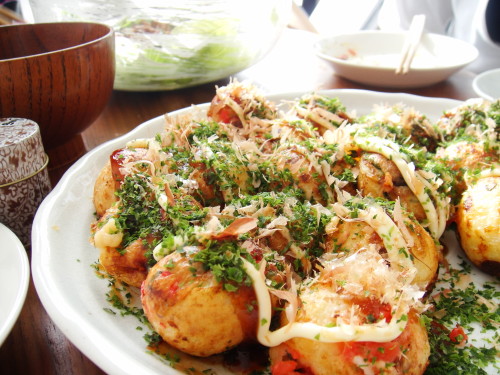
Takoyaki is a Japanese wheat flour-based snack filled with diced octopus.

Home-made Nagomi Visit Takoyaki

Although you can eat it at food stalls especially in the Osaka area, at a Nagomi Visit you will be able to make home-made ones.

Home-made Nagomi Visit Takoyaki

Mix flour, eggs and water (sometimes use dashi stock) then fry it in the special pan, put the boiled octopus and keep turning them until they are round shapes. Place it on plate, and pour the Takoyaki sauce, mayonnaise, seaweed powder and bonito flakes.

Home-made Nagomi Visit Takoyaki

Nagomi Visit is a great opportunity to discover regional dishes and of course interesting people all across Japan.

Home-made Nagomi Visit Takoyaki

Osechi - dish for celebrate new year in Japan

2012-01-02

Osechi - dish for celebrate new year in Japan

Happy new year!

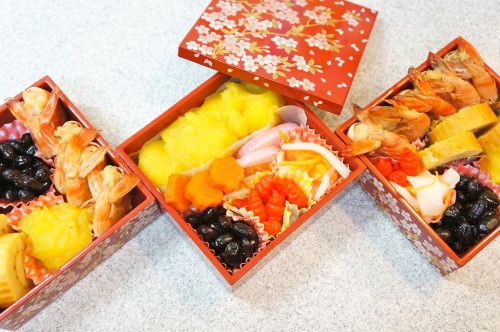
In Japan people eat traditional meal on new year days. This meal called as Osechi and it's variety kind of dishes and serves in a bento-box style plate.

People eat this Osechi with family and friends to celebrate new year. I cooked Osechi for this year! We can also buy Osechi at department store, supermarket or even via internet in these days but I tried to cook it with my sister on 31st Dec.

Datemaki Tamago 伊達巻きたまご - Rolled up sweet omlet

Osechi - Datemaki Tamago 伊達巻きたまご - Rolled up sweet omlet

I love this sweet omlet very much! Originally my grand mother bought us a special Datemaki every year so my favorite taste of Datemaki is not a homemade but I wanted to try to cook by myself.

Kuromame 黒豆 - Sweet black beans

Osechi - Kuromame 黒豆 - Sweet black beans

Cooking this dish takes a long time but we use pressure pot for this time so could save the time lot ;)

Steamed shrimp えびの出汁煮

Osechi - Steamed shrimp えびの出汁煮

All menu for Osechi has meaning and shrimp meaning "live a long time" because hip of shrimp stoop such as old man.

Kurikinton 栗きんとん -Sweet potato with chestnut

Osechi - Kurikinton 栗きんとん -Sweet potato with chestnut

Kurikinton is my favorite Osechi menu as well. My mother made it every year when I was child :) This is the sweet potato colored with brilliant yellow and put in some chestnut.

Typically this Osechi cooked a lot and have eaten for some days but we didn't cook a lot for this time so it have been finished after few hours from 12:00 on Jan. 1st ;)

Making Original Kyaraben with Nagomi Visit

2011-12-13

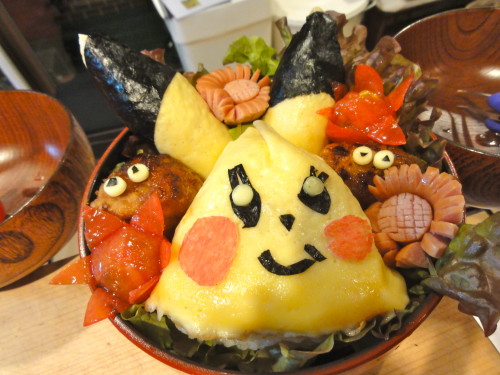
We made original kyaraben character bento box with Elizabeth who come from USA and Ai who come from Japan on last Wednesday.

First of all, started to make Tofu meatballs with teriyaki sauce.The teriyaki sauce made by same amount of Soy sauce, sugar, Sake and Mirin which the sweet cooking sake. It's easy to remember isn't it?

They fried meatballs with big smile!

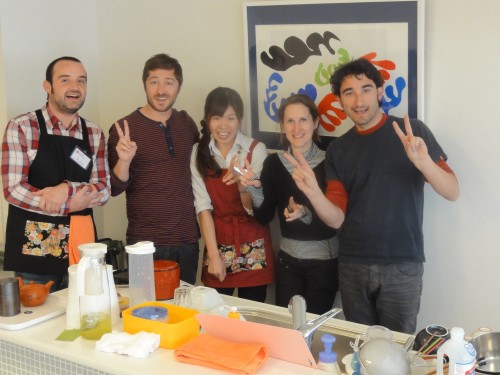
From this time we prepared apron for each participants. The color is beige and black and the Japanese taste pattern on the pockets.So you don't have to bring anything when join our cooking program!

Second step was making the character, it's a main event of the program :)I have a sample but participants can make it as absolutely original face with Nori seaweed.

Elizabeth made a eyebrow of Picachu, it's a very manlike. Nice!

She said she would like to join again when her friend come to Tokyo or another cooking program offered.

I updated the comments from participants who joined our cooking program, please check it.

Note: Nagomi Visit no longer offers these bento cooking classes but in our current Nagomi Visits you can cook together with our hosts.