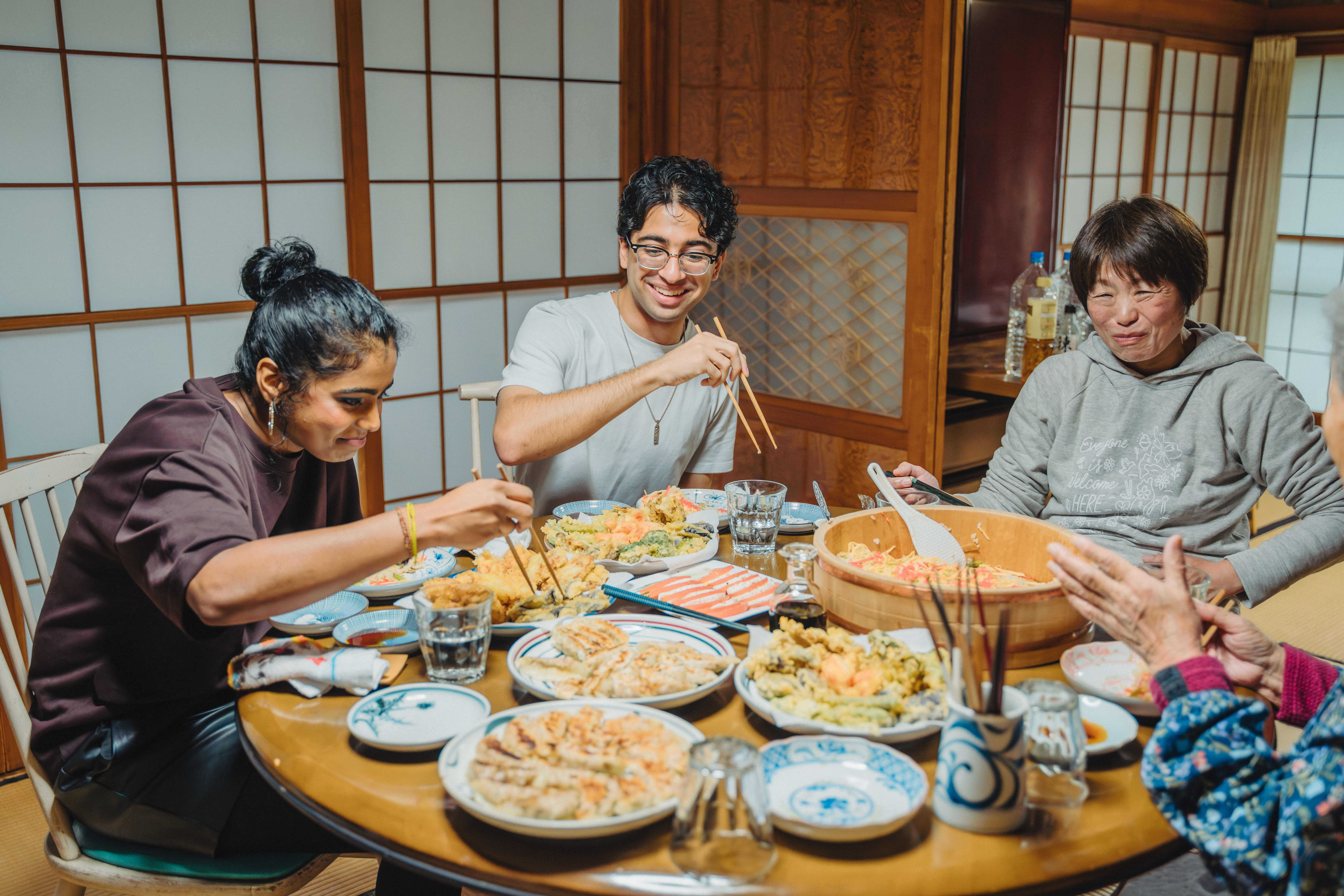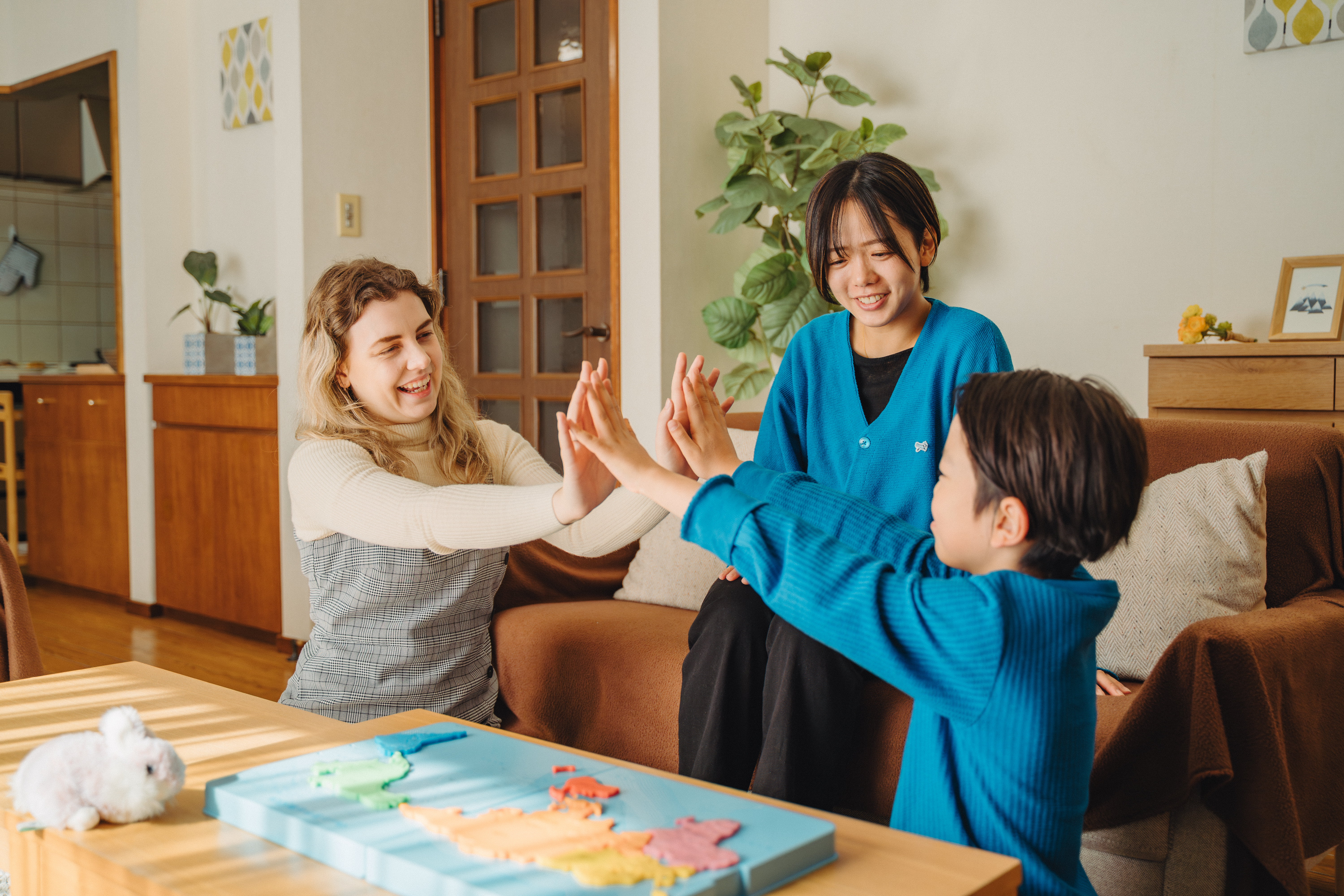
The history of Borderless Visit begins in Tokyo in 2011, when a small program began with meals in local homes. In 2012 it was renamed Nagomi Visit. Since November 2025, the same program has been called Borderless Visit.
This page brings together the program’s own blog records from 2011 to 2023 and its official announcements from 2025. Prices, booking rules and services described in old posts from those years are history, so they do not describe the program today.
Borderless Visit history at a glance
The table shows the main steps, from the first idea in 2009 to the current name.
| Year | What happened |
|---|---|
| 2009 | The founder shares a meal in a local home in Denmark |
| 2011 | The program starts in Tokyo with 3 host families |
| July 2012 | The first host family outside the Tokyo area joins, in Osaka |
| October 2012 | Renamed Nagomi Visit, with new Japanese and English websites |
| January 2013 | Registered as a nonprofit organization |
| September 2013 | Second anniversary, with close to 100 hosts |
| 2013 to 2018 | TV and press coverage, and a Japan Foundation prize |
| March 2020 | Activities stop because of COVID-19 |
| July 2023 | The program restarts after 3 years |
| September 2025 | Borderless House Corporation takes over operations |
| November 2025 | The program gets its current name |
How it started: a meal in Denmark and a Tokyo kitchen
The idea came from a trip. In 2009, the founder visited Denmark for the first time and was invited to share a meal in a local home. The food and the people were new, but the warmth felt just like a meal with friends and family back in Japan.
The founder later linked this feeling to a Japanese saying, onaji kama no meshi o kuu, which means to eat rice from the same pot. The saying became the program’s simple goal: people from different places share a table and start to see each other as people.
The program started in Tokyo in 2011. Its first 3 host families were friends of the team. At first there was no proper website, and the small team found new hosts through their own personal network.
A new name and growth across Japan, 2012 to 2014
First steps beyond Tokyo
In its first year, some guests joined more than one meal, even when all hosts lived in the greater Tokyo area.
In July 2012, the first host family in the Kansai region started to welcome guests in Osaka. The aim was to welcome travelers visiting Osaka, Kyoto and Nara too.
A new name and nonprofit status
In October 2012, the program changed its name to Nagomi Visit. The new name put the focus on the hosts who share their food, because they were the center of the program. The team also rebuilt its Japanese and English websites, and in its first year the program had reached close to 150 participants.
In January 2013, the program registered as a nonprofit organization. By then it had close to 30 hosts and 200 guests. The team said this step would help it earn trust through openness, keep the program going for years, and run it together with its community. This was the structure in 2013, and it changed later, as the 2025 section shows.
Hosts and guests in 2013
By May 2013, guests had come from 35 countries. They were couples, families with children, friends and solo travelers, mostly aged 20 to 60. A few active travelers in their 70s also asked to join. School groups and people living in Japan took part as well.
In 2013, many hosts were in their 20s to 60s. They lived in cities such as Tokyo, Osaka, Kyoto, Nagoya, Sendai, Fukuoka, Niigata, Matsumoto and Iga Ueno. Many of them hosted because they had once been welcomed into a local home themselves.
In September 2013, the program marked its second anniversary with close to 100 hosts. A summary of the first 2 years showed 5 times more participants than the year before, and guests from 19 more countries. Many came from the United States, Australia, Singapore, Spain, Canada, the UK and Italy.
Tokyo was the most popular area that year, followed by Osaka and Kyoto. More hosts could also cook vegetarian or vegan meals, or meals without pork or beef. Guests often found home dishes they had never seen in Japanese restaurants abroad. Some saw that a family may cook a familiar dish in its own way.
Panels and a host meetup in 2014
In October 2014, the founder spoke on a panel at the Minato International Dialogue 2014, an event held by Minato City in central Tokyo. The panel talked about omotenashi, the Japanese idea of hospitality, and grassroots international exchange.
In November 2014, the second annual general assembly and host meetup took place in Tokyo. Hosts of all ages, from children to grandparents, came together. Many had welcomed several guests and said that hosting helped them question stereotypes and learn more about their own country.
Between 2013 and 2018, the program also appeared on TV and in newspapers and magazines in Japan and abroad.
Why the team cared: a message from 2015
In January 2015, the program’s chief operating officer at the time wrote about why this work mattered. The officer grew up in the United States with Japanese roots, at a time when many people there saw Japan as either mysterious or strange.
As a teenager in the late 1990s, the officer ran a small website that tried to show daily life in Japan beyond the guidebooks. Later, after living in Japan for 10 years, the officer saw the job in a new way. The goal became to help travelers meet the people who live in Japan and let those people share their own country.
The message also said that a meal lasts only a few hours. Even so, it can open communication between people who might never meet otherwise. The hope was that guests and hosts would see each other as whole people, beyond their cultural differences.
A pause during COVID-19 and the restart in 2023
In February 2020, as the new coronavirus spread, the program shared guidelines with hosts and guests about cancellations and infection prevention during that period. On March 5, 2020, it stopped its activities for the time being. New requests and new host registrations were paused, and meals that were already confirmed could still go ahead as planned.
The pause lasted 3 years. The program restarted on July 3, 2023, and requests from travelers around the world came in right away. A few meals took place in the very first week after the restart.
At that time, the program ran on donations from its hosts and on grants from the Ministry of Economy, Trade and Industry and the Nippon Foundation. The team hoped to become a sustainable organization again as more guests returned.
Since 2025: a new operator, a new name and the program today
From September 1, 2025, Borderless House Corporation took over the operation of the program, and the same team continued to run it day to day. The operations announcement from August 2025 gives the details.
On November 25, 2025, the program, then called Nagomi Visit, was renamed Borderless Visit. The new name and logo stand for connections across borders around a shared table. The way the meal works and the team behind it stayed the same, as the rename announcement explains.
Borderless Visit (formerly Nagomi Visit) is a cultural exchange program where travelers share a home-cooked meal with a local Japanese host family. Guests usually spend 2 to 3 hours at the host’s home, and there is no overnight stay.
Records from 2013 to October 2026 show 5,432 visits to host families’ homes, starting from 72 meeting points in 39 prefectures, from Hokkaido to Okinawa. Guests came from 82 countries and regions, and most visits started within about an hour of Tokyo, Kyoto or Osaka.
Guests who would like to cook can ask a host about cooking together, as an equal sharing between people and not as a professional lesson.
The setting has grown far beyond a small kitchen in Tokyo in 2011. The core is still the same: people from different places at one table, eating rice from the same pot.